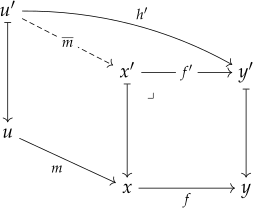
First suppose both ๐โฒ :๐ฅโฒ โ๐๐ฆโฒ and ๐โฒ :๐ฆโฒ โ๐๐งโฒ are cartesian.
Let ๐ :๐ข โ๐ฅ and โโฒ :๐ขโฒ โ๐๐๐๐งโฒ.
Since ๐โฒ is cartesian, there is a unique โโโ๐๐ :๐ขโฒ โ๐๐๐ฆโฒ such that ๐โฒโโโ๐๐ =โโฒ.
Since ๐โฒ is cartesian, there is a unique โโ๐ :๐ขโฒ โ๐๐ฅโฒ such that ๐โฒโโ๐ =โโโ๐๐;
Thus โโ๐ is the unique solution to ๐โฒ๐โฒโโ๐ =โโฒ.
Thus ๐โฒ๐โฒ is cartesian.
For the converse, suppose both ๐โฒ :๐ฆโฒ โ๐๐งโฒ and ๐โฒ๐โฒ :๐ฅโฒ โ๐๐๐งโฒ are cartesian.
Let ๐ :๐ข โ๐ฅ and โโฒ :๐ขโฒ โ๐๐๐ฆโฒ.
Since ๐โฒ๐โฒ is cartesian, there is a unique โโ๐ such that ๐โฒ๐โฒโโ๐ =๐โฒโโฒ.
Since ๐โฒ is cartesian, there is a unique โโโ๐๐ such that ๐โฒโโโ๐๐ =๐โฒโโฒ.
Thus we conclude โโโ๐๐ =๐โฒโโ๐.
Thus โโ๐ is the unique solution to ๐โฒโโ๐ =โโฒ,
proving ^P1.