Limits
Intuitively (for the formal definition, see Epsilon-Delta Construction of the Limit),
a limit of function
is what
In other cases, it may be a value which the function visibly approaches
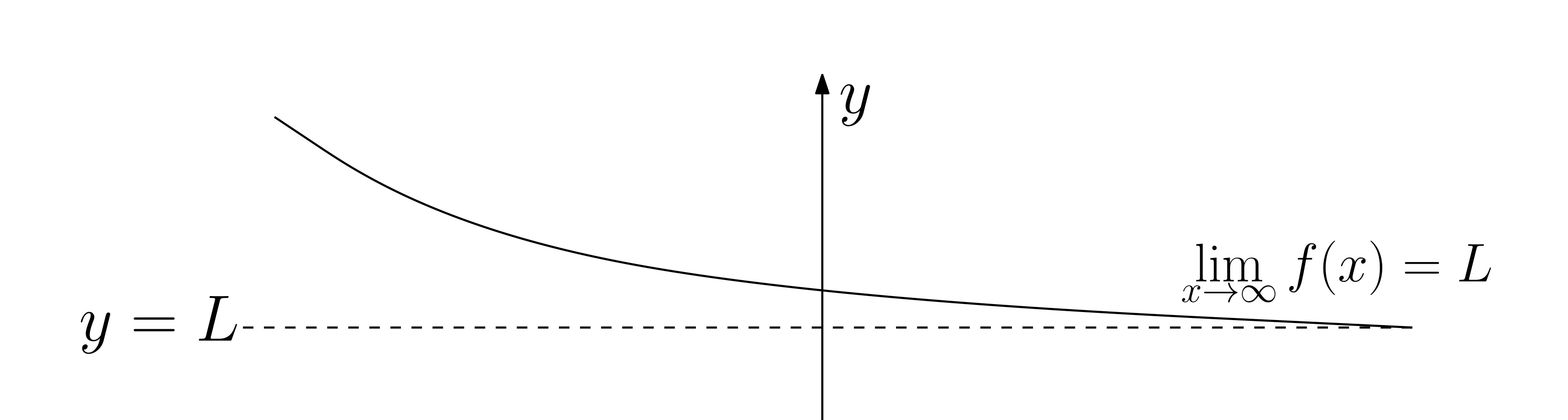
Limits can be calculated using Limit Laws. They are generalised by the category-theoretic notion of Limits and colimits
One-sided limits
Limits can be defined as approaching from the left hand side (
Undefined limits
Limits Do Not Exist (DNE) in cases where
- For a bilateral limit,
𝑥 → 𝑎 + 𝑥 → 𝑎 − - The limit is
± ∞ - The input limit (i.e. what
𝑥 𝑓 ( 𝑥 )
Multivariable limits
See Multivariable limits.
#state/tidy | #SemBr