𝑅-tensor product of modules

𝑅-tensor product of linear maps

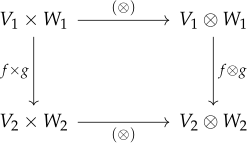
Suppose 𝑓 𝖬𝗈𝖽𝑅(𝑉1,𝑉2) and 𝑔 𝑅𝖬𝗈𝖽(𝑊1,𝑊2). Then there is a unique morphism 𝑓 𝑔 :𝖠𝖻(𝑉1 𝑊1,𝑉2 𝑊2), called the tensor product of the maps 𝑓 and 𝑔, such that

c|https://q.uiver.app/#q=WzAsNCxbMiwwLCJWXzEgXFxvdGltZXMgV18xIl0sWzIsMiwiVl8yIFxcb3RpbWVzIFdfMiJdLFswLDIsIlZfMiBcXHRpbWVzIFdfMiJdLFswLDAsIlZfMSBcXHRpbWVzIFdfMSJdLFswLDEsImYgXFxvdGltZXMgZyJdLFsyLDEsIihcXG90aW1lcykiLDJdLFszLDAsIihcXG90aW1lcykiXSxbMywyLCJmIFxcdGltZXMgZyIsMl1d

commutes. #m/thm/module

Proof

We claim that the map

:=()(𝑓×𝑔):𝑉1×𝑊1𝑉2𝑊1

along the diagonal is balanced, the conclusion then follows from the Universal property of the tensor product. Let 𝑣,𝑣 𝑉1, 𝑤,𝑤 𝑊1, and 𝛼 𝑅. First, we have

(𝑣,𝑤+𝑤)=𝑓𝑣𝑔(𝑤+𝑣𝑤)=𝑓𝑣(𝑔𝑤+𝑔𝑤)=𝑓𝑣𝑔𝑤+𝑓𝑣𝑔𝑤=(𝑣,𝑤)+(𝑣,𝑤)

giving ^B2. Similarly

(𝑣+𝑣,𝑤)=𝑓(𝑣+𝑣)𝑔𝑤=(𝑓𝑣𝑓𝑣)𝑔𝑤=(𝑓𝑣+𝑓𝑣)𝑔𝑤=𝑓𝑣𝑔𝑤+𝑓𝑣𝑔𝑤=(𝑣,𝑤)+(𝑣,𝑤)

giving ^B2. Finally,

(𝑣𝛼,𝑤)=𝑓(𝑣𝛼)𝑔𝑤=(𝑓𝑣)𝛼𝑔𝑤=𝑓𝑣𝛼𝑔𝑤=𝑓𝑣𝑔(𝛼𝑤)=(𝑣,𝛼𝑤)

giving ^B3. Therefore is balanced, as claimed.

See also


#state/tidy | #lang/en | #SemBr